Separate equipment data from the site criterion
A purchaser may begin with a planning or environmental limit for the whole facility. That limit can include transformers, fans, switchgear, nearby plant, traffic and building services. The transformer supplier needs a clearly allocated equipment requirement that can be compared with the package and its declared operating condition.
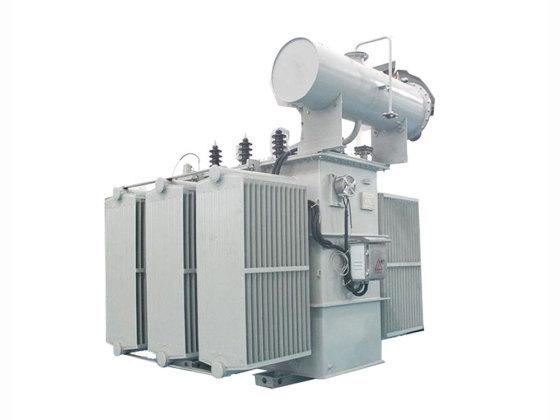
The oil-immersed transformer range contains product information, but it does not publish a sound guarantee for every rating or configuration. Do not infer a site result from a product family name. Ask the project team to define the allocated equipment limit and the location at which any site criterion applies.
Define the value and measurement basis
Sound power and sound pressure are not interchangeable labels. A sound-power declaration describes emitted acoustic energy under a stated method; sound pressure describes a level at a measurement position and depends on the surrounding environment. When comparing bids, first confirm that the quoted values use the same quantity, units, reference conditions and method.
The current IEC catalogue lists IEC 60076-10:2016 for determining transformer sound levels and IEC 60076-10-1:2016+A1:2020 as its application guide. The guide discusses measurement conditions, accuracy and why factory values may differ from in-service values. If the contract references either document, name the required edition and have the responsible engineer confirm the applicable procedure. A standard reference is not evidence that a particular transformer has been tested to that standard.
| RFQ item | Decision to record | Supplier response to request |
|---|---|---|
| Acoustic quantity | Sound power, sound pressure or a project-specific guarantee | Quantity, units, reference and declaration basis |
| Measurement method | Contract standard and edition, or agreed alternative | Procedure, positions and relevant corrections |
| Operating state | No-load or load condition and required test state | Test condition and any assumed load or current |
| Cooling equipment | Natural cooling, fans, pumps or other included auxiliaries | Equipment included in the declaration and its operating state |
| Transformer setup | Tap position and any specified electrical condition | Test configuration and applicable rating |
| Site limit | Location, period and whether the criterion applies to equipment or facility | Allocated equipment requirement and exclusions |
| Evidence | Declaration, measurement report or acceptance test scope | Document type, availability and project-specific limitations |
Identify the operating configuration
Noise can depend on what equipment is running and on the conditions defined by the test method. The RFQ should identify which cooling auxiliaries are included, whether the requirement applies at a specified tap position and what electrical state is to be assessed. If more than one state matters, list each state rather than requesting one unspecified maximum.
For a factory measurement, agree the test setup, measurement positions and environmental corrections under the selected method. For a site criterion, separately define the receiver location, operating schedule, background condition and which other sound sources are included. The supplier can then state which parts are within its scope and which require a site acoustic study.
Make supplier deviations visible
Ask bidders to return the requested value next to the standard or method, edition, operating state and included cooling equipment. Require a clear response if the value is a guarantee, a calculated declaration, a type-test reference or a routine measurement. These evidence types serve different purposes and should not be presented as if they were equivalent.
If a supplier proposes acoustic barriers, enclosures or other mitigation, request the design boundary, ventilation implications, access requirements and party responsible for installation. Do not accept a promise to “meet local noise rules” without identifying the actual limit, measurement location, operating condition and acceptance procedure.
Example: factory value compared with a site boundary
Two quotations list different numbers in decibels, but one gives sound power and the other gives sound pressure at an unstated distance. A project reviewer cannot compare them directly. Even two pressure values may not be comparable if measurement positions, background correction, load condition or fan operation differ.
Return both offers to a common RFQ schedule. Ask each supplier to identify the acoustic quantity and evidence basis, then have the project engineer determine whether a separate site study is needed to address propagation and the facility boundary criterion.
RFQ checklist
- The required acoustic quantity, units and reference basis.
- Applicable measurement standard and contractually required edition.
- Factory declaration, guarantee or acceptance evidence required.
- Electrical operating condition, tap position and relevant loading state.
- Cooling auxiliaries included and their required operating state.
- Measurement positions, method and corrections for any factory test.
- Site receiver location, schedule and facility-level limit, if applicable.
- Background noise and other sound sources included in site assessment.
- Mitigation scope, ventilation/access interfaces and responsible parties.
- Supplier assumptions, exclusions and report deliverables.
Send the requested rating and acoustic schedule with a transformer quotation enquiry. For an initial project discussion, use Jinxing's contact page; the final sound basis must be agreed for the specific configuration and site.